
Canada Lags in Global “Robot Race”
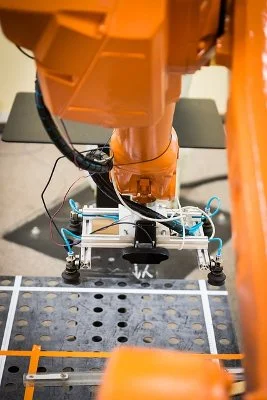
The world has been in the midst of a rapid transformation, the adoption of new technologies, specifically manufacturing robotics and AI, has taken off and is reshaping the world economy.
Countries such as China, the UK, Japan and Sweden lead the world in tech implementation, with most attributing the majority of their manufacturing processes to automation. Despite its leadership in robotics and AI development, less than half of Canada’s manufacturing processes are automated. Canada boasts quality research and technological innovation, but much of this innovation ends up being sourced by other countries who benefit more from it, while Canada benefits less from its own innovation than it should.
What is the Innovation-Ecosystem Gap?
Canada is known as a leader on the world stage, and it is home to no shortage of talent and capability. An abundance of technological innovation has been developed here by researchers, universities and grassroots startups. Canadian researchers are leaders in fields such as AI, oil extraction tech, and cybersecurity. This technology is developed and birthed here, but is not being used to advance our own economy. This creates an innovation vs ecosystem gap.
Canadian startups teams are producing brilliant tech solutions and breakthrough research, we are a country with high education rates and no lack of resources. However, all of the great research and innovation that is being done here is not resulting in economic improvement. In 2025 Canada ranked 17th in the Global Innovation Index overall, 13th in innovation input, and 20th in innovation output. What this means is that our input is much greater than our output. We are devoting time and energy into the creation of world-changing tech, but we are failing to ensure that it benefits our own Country. In order to see an economic improvement, we need to focus our efforts on improving the output of our innovative efforts.
Why is Canada Falling Behind?
Canadian tech and innovation organizations are scattered, which means that each province operates differently. Canadian tech companies lack the government support required to integrate their innovative progress into the economy. Our current tech economy uses a decentralized approach with regards to tech adoption, while leading countries in tech use centralized, federal strategies.
Take China’s Nanshan, a tiny southwestern sector of the city Shenzhen, which in 2025 boasted a GDP of approximately 144 billion U.S. dollars. Nearly all of this resulted from a strong technological innovation ecosystem. In fact, Shenzhen’s robotics ecosystem is larger than all of North America, and Nanshan’s Liuxian corridor is now being referred to as ‘Robot Valley’. The reason their tech ecosystem is thriving so well is because they benefit from unified government support and prioritization. Startups in Nanshan receive large funding and expedited regulatory approval to accelerate their tech into the ecosystem.
Canadian startups continue to fail to receive the same support as there is an underlying fear around a lack of return in investment. Established tech organizations don’t want to take large risks, and small, grassroots companies that are willing to take risks, lack the funding to take those risks. CBC news reports that industry leaders are still indicating a lack of understanding surrounding robotics. According to Pablo Molina, founder of Ontario based AvidBots: "Due to lack of training, [leaders] just don't understand. They don't see the ROI (return on investment), the value," Molina said. "They think it's OK to continue doing it the old way." In order for Canada to advance and thrive in the tech ecosystem, those with the ability to invest large capital need to see the advantage in taking the risks that could lead to improved economic output. For Canada to be able to compete with leaders like Shenzhen, tech industry experts insist that our current decentralized approach needs improvement, and standardization.
How Can we Improve?
With the global market for tech innovation continuing to grow, it is a critical time for Canada to implement a national strategy that is clear and unified. ABI research estimated that the global robotics market had grown to nearly $50 billion US in 2025, falling behind will mean missed opportunities for economic growth in Canada. Clear strategies for implementing the innovation that Canada is creating need to be formed. Along with a unified nationwide approach, we need to see an increase in federal funding towards robotics research and development, such as grants and tax credits.
When focusing on this unified strategy, Canada should focus on our areas of strength in order to place us in a competitive position among the world leaders. Experts in AI and innovation Dr Daniel Araya, and Peter Suma suggested a strategy that “firmly recommends establishing domestic manufacturing for critical, strategic robotics components—particularly those related to defense, healthcare, and space robotics.” emphasizing that focusing on these areas of strength would provide Canada with “crucial security and resilience in supply chains.”
Focus on a clear, centralized strategy that pushes Canada’s strengths to the forefront will benefit both Canada, and the global economy, ensuring we remain vital players in the robot race.
What Role does Alberta Play?
While industry experts push for a large-scale national strategy, Alberta based corporations work to fill the gaps. These self-initiated organizations are striving to connect talent, research, and industry. Sarcomere Dynamics , an Alberta startup now expanded to BC creates high-dexterity robotics hands that are groundbreaking and attempting to close gaps in the labour market. Sarcomere CEO Harpal Mandaher partners with manufacturers that bridge new tech with the industries that use them, and credits Alberta’s tech and engineering talent for helping him create a product that is revolutionizing automation on a global scale.
Alberta’s Network for Applied Technology has been supporting the province’s growing and young tech community since 2021 by providing the support for fresh ideas to develop and explore their potential. Upwards of 250 prototypes have been created through natHacks and natIgnite, while successful projects funded by sponsors help push these prototypes forwards, including into industry pilots and clinical settings. NAT aims to close the gaps between new, innovative tech, and city-wide application.
With the help of a unified, nationwide strategy, and investment into grassroots technological innovation, Canada can propel the economy forward, expanding possibilities and taking our economic productivity to new levels.