
Fracturing Hyperreality
How Shenzhen inspired a sculpture that reveals the catastrophic faults in Canada's innovation ecosystem.
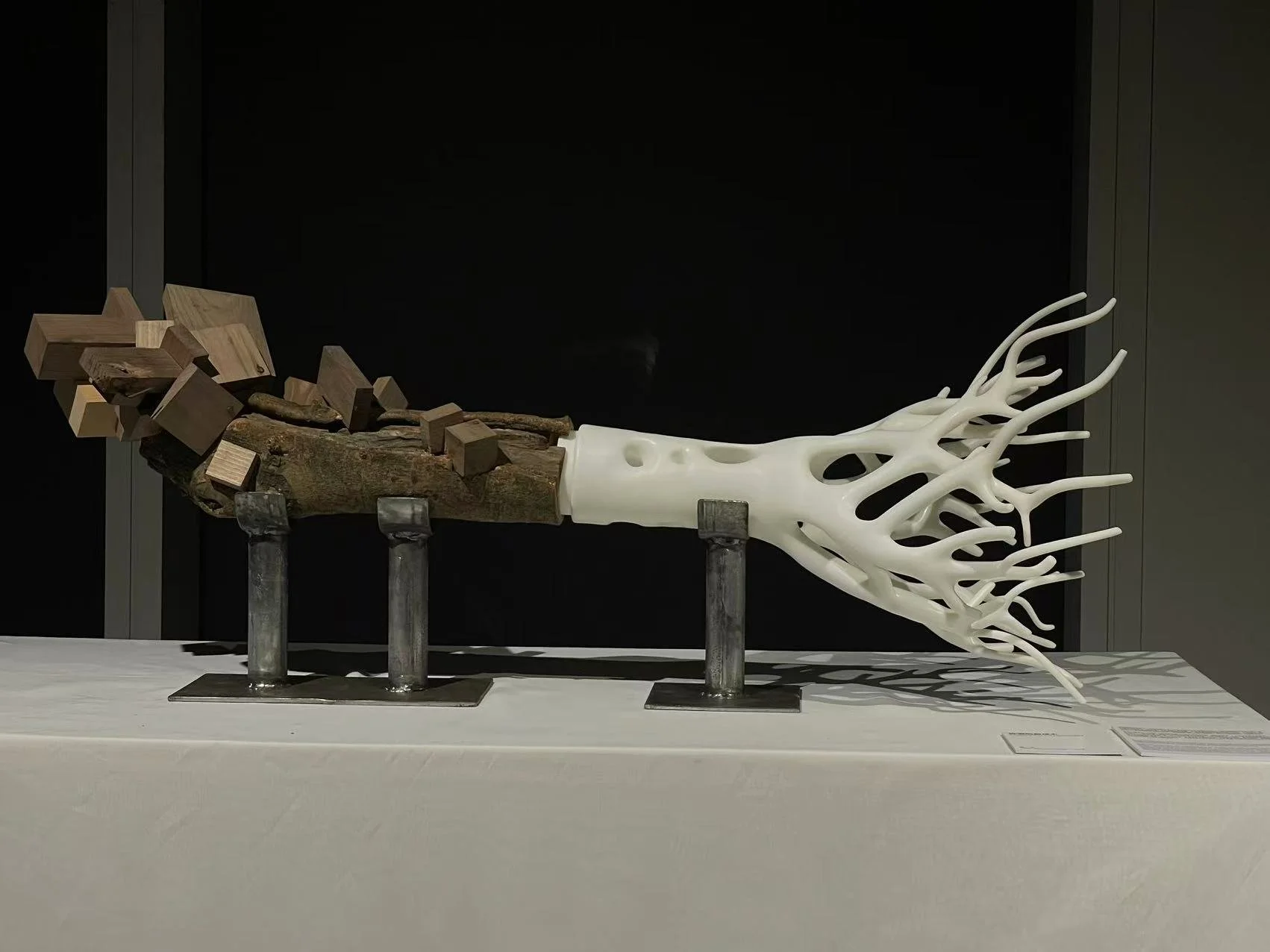
I went to Shenzhen with no intention of making art.
I was there for MIT Media Lab's Scalable Human Computer Interfaces program, a Symposium followed by a month-long Residency, where I would be surrounded by technologists, researchers, and designers working at the intersection of computation and physical space. Then Shenzhen happened.
Shenzhen’s Intentionally Cultivated Soil
Every city has a texture, but Shenzhen's texture is unlike anything I've encountered — and I want to push back hard against the lazy explanation people tend to reach for when they seek to describe it.
It's not just the density.
I've heard countless variations of this refrain from Canadian urbanists, policy people, and innovation commentators more times than I can count: "Shenzhen has nearly 20 million people in a dense urban core, so of course things collide and cross-pollinate. We don't have that here, so we can't expect the same outcomes." As if density is a natural resource that some cities simply have and others don't, as if Shenzhen's creative energy is a freak geological accident.
But what makes Shenzhen electric isn't the headcount. It's the intention behind how the city has been built to bring people together across domains. The Hetao Science and Technology Innovation Center, where my work was displayed, is a deliberate instrument of that philosophy. It's not an office park that just happened to get interesting. It's a space engineered for the productive friction between technology, art, manufacturing, and speculation about urban futures — with the institutional backing to sustain and increase that friction over time.
The 10th UABB — the Bi-City Biennale of Urbanism\Architecture — is another expression of the need for intentional community-building that creates the space for interdisciplinary works to co-mingle - around which resources and structural incentives reward intentional and meaningful outputs.
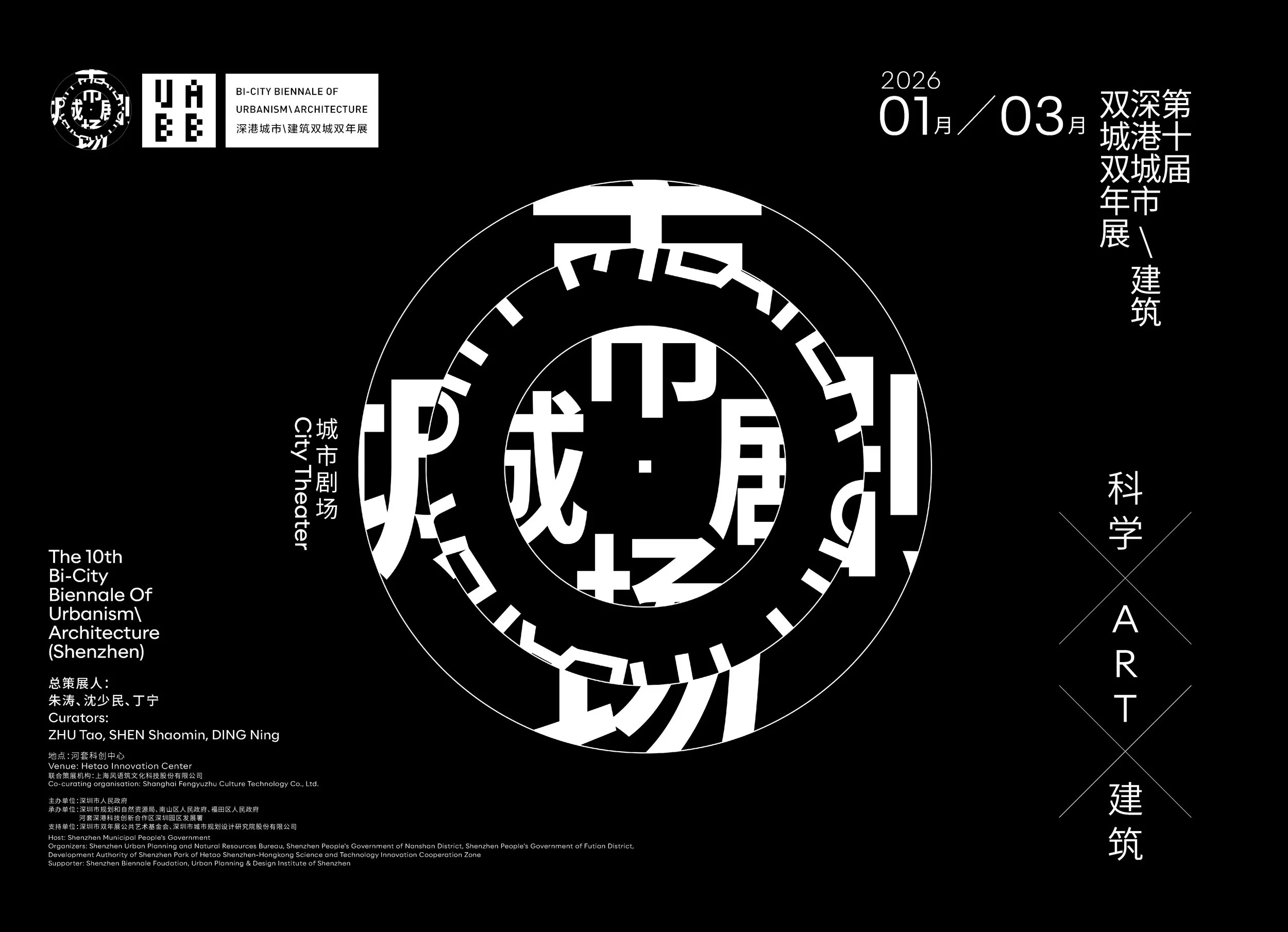
Running since 2005, co-organized by Shenzhen and Hong Kong, it's the only biennale in the world dedicated exclusively to urbanism and urbanization. This edition's theme was City Theatre — the collision of technology, art, and public life. 489 works, 800+ contributors, across 21 countries. The Hetao venue is specifically oriented around speculative urban futures.
This is what intentional community building looks like at scale. It's not accidental, but rather a decades-long civic commitment to putting the right people in the same rooms, repeatedly, with purpose.
That is something Canada could choose to do – we just haven't.
The Sculpture
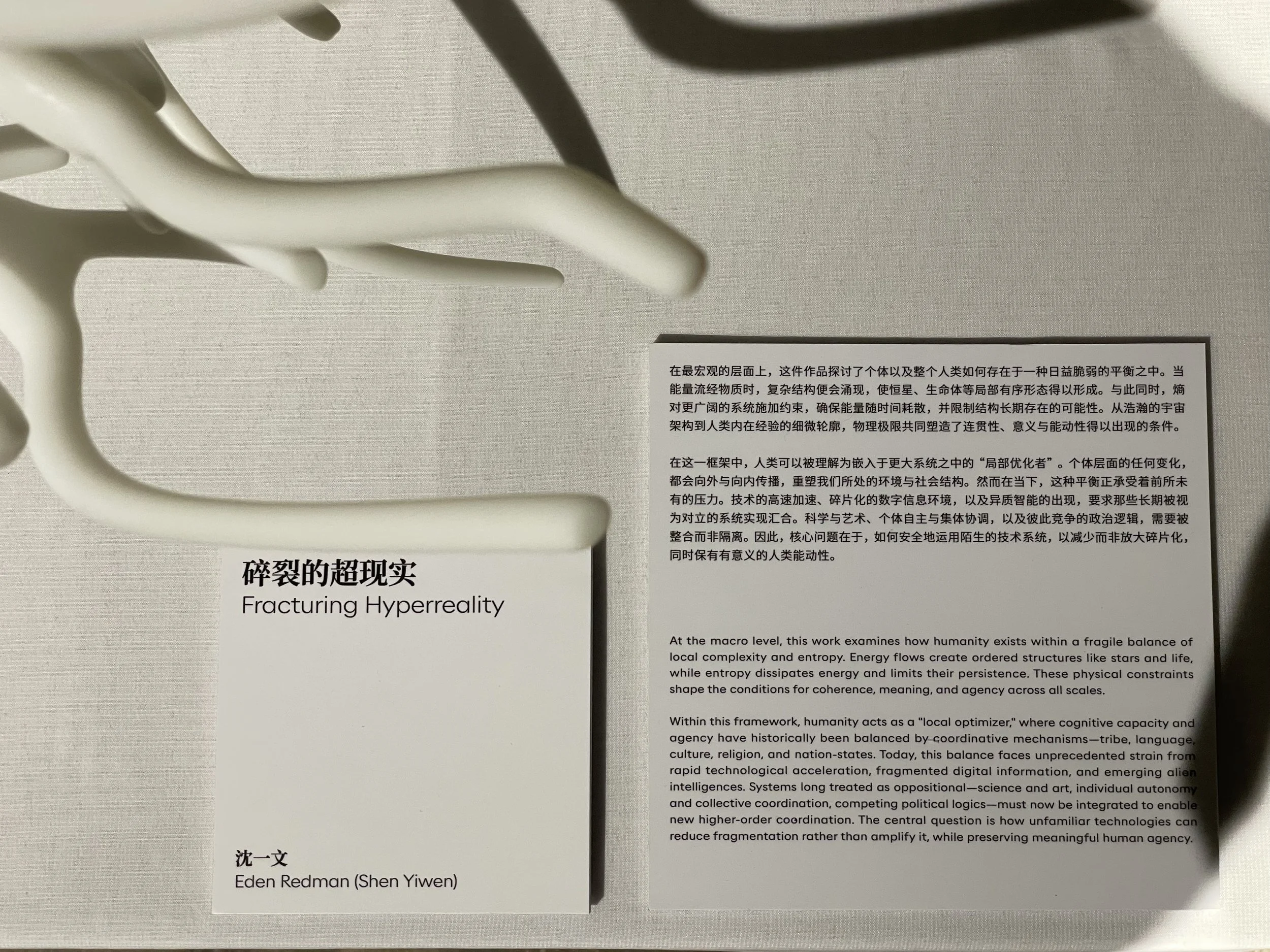
Fracturing Hyperreality emerged from that environment in a way I can only describe as inevitable in retrospect and completely unplanned in the moment.
The MIT Residency structure is deliberately cross-domain — you sit across from people whose work has nothing to do with yours, and the conversations that result aren't polite or surface-level, they go somewhere.
The conceptual ground the work stands on starts at the most macro scale possible: when energy flows through matter, complex structures emerge—stars and living organisms. Locally ordered forms that persist against entropy's constant pressure to dissipate them. From there, you zoom in to humanity as a particular kind of local optimizer, one whose increasing cognitive capacity has been balanced over millennia by successive coordinative mechanisms: tribe, language, culture, religion, and nation-state. Each is a larger tent than the last, each a way of holding more complexity together.
The sculpture argues that we are at an inflection point in that story and that we are not handling it well.
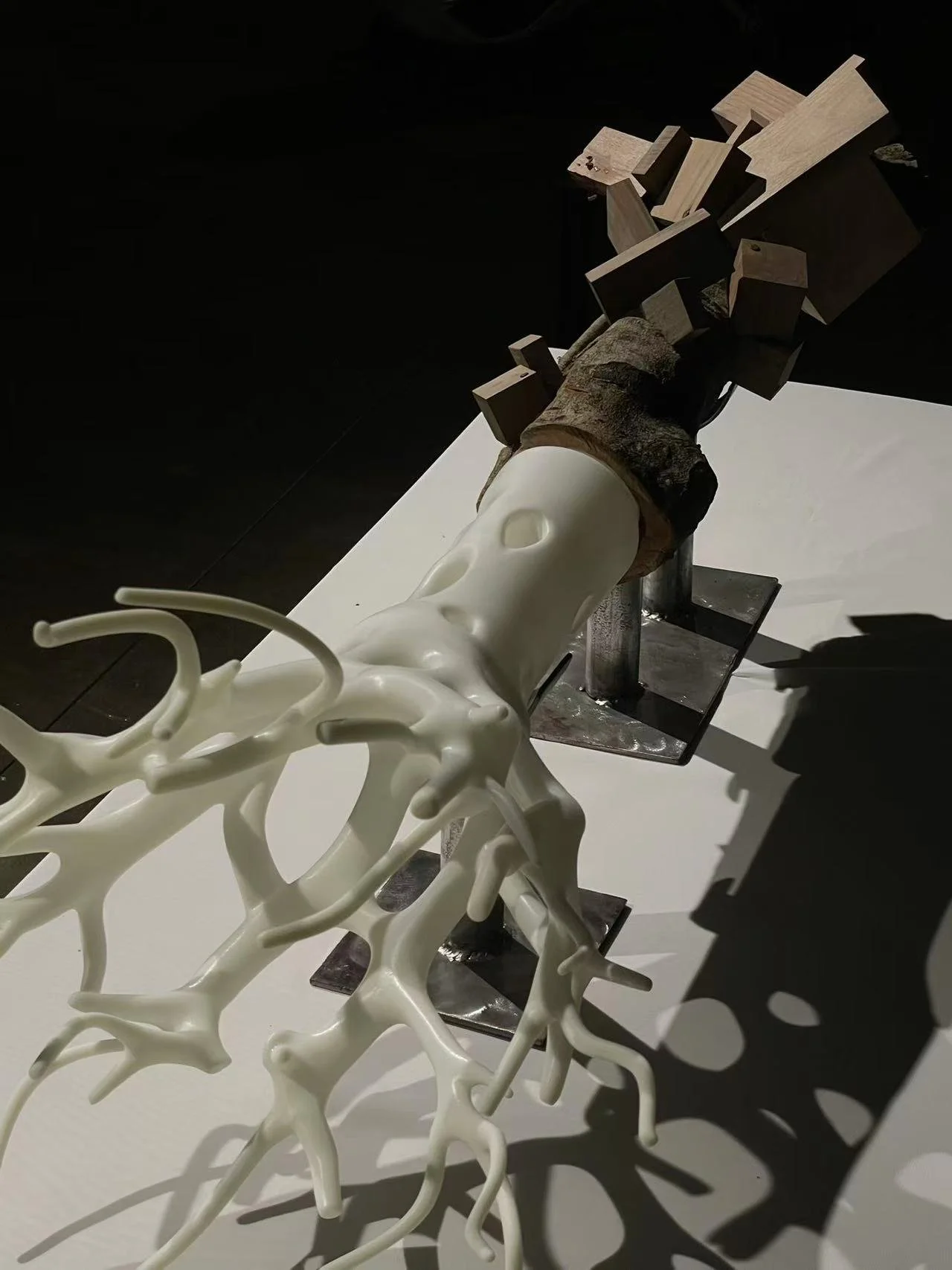
Rapid technological acceleration, a fragmented digital information landscape, and the emergence of genuinely alien intelligences are forcing a convergence of systems that we have spent centuries treating as separate or actively opposed. Science and art, individual autonomy and collective coordination, competing political logics. The productive response to that pressure is integration, not further subdivision. The question is whether we can build higher-order mechanisms of coordination fast enough, and whether the systems we're building, technological and institutional, reduce fragmentation or amplify it.
Unfettered postmodernism fails this test completely. Not because deconstruction is worthless (it isn’t) but because a posture of perpetual critique without synthesis has become its own kind of intellectual anesthetic. It performs the appearance of rigor while foreclosing the harder work of integration. It fragments as evasion rather than as argument. Brain rot. Or colloquially 豆腐脑 [Dòufu nǎo] (Tofu Brain) in Chinese.
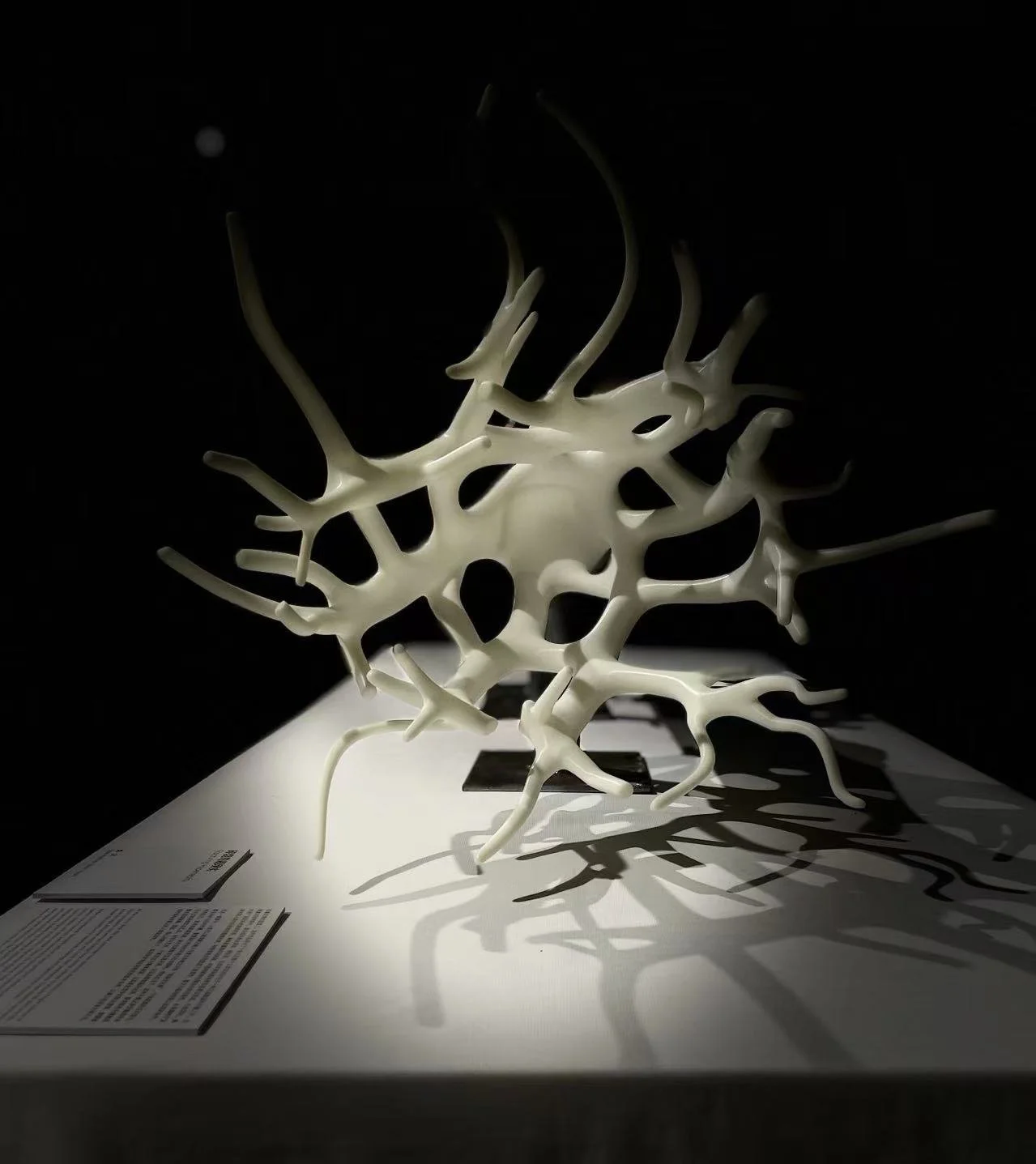
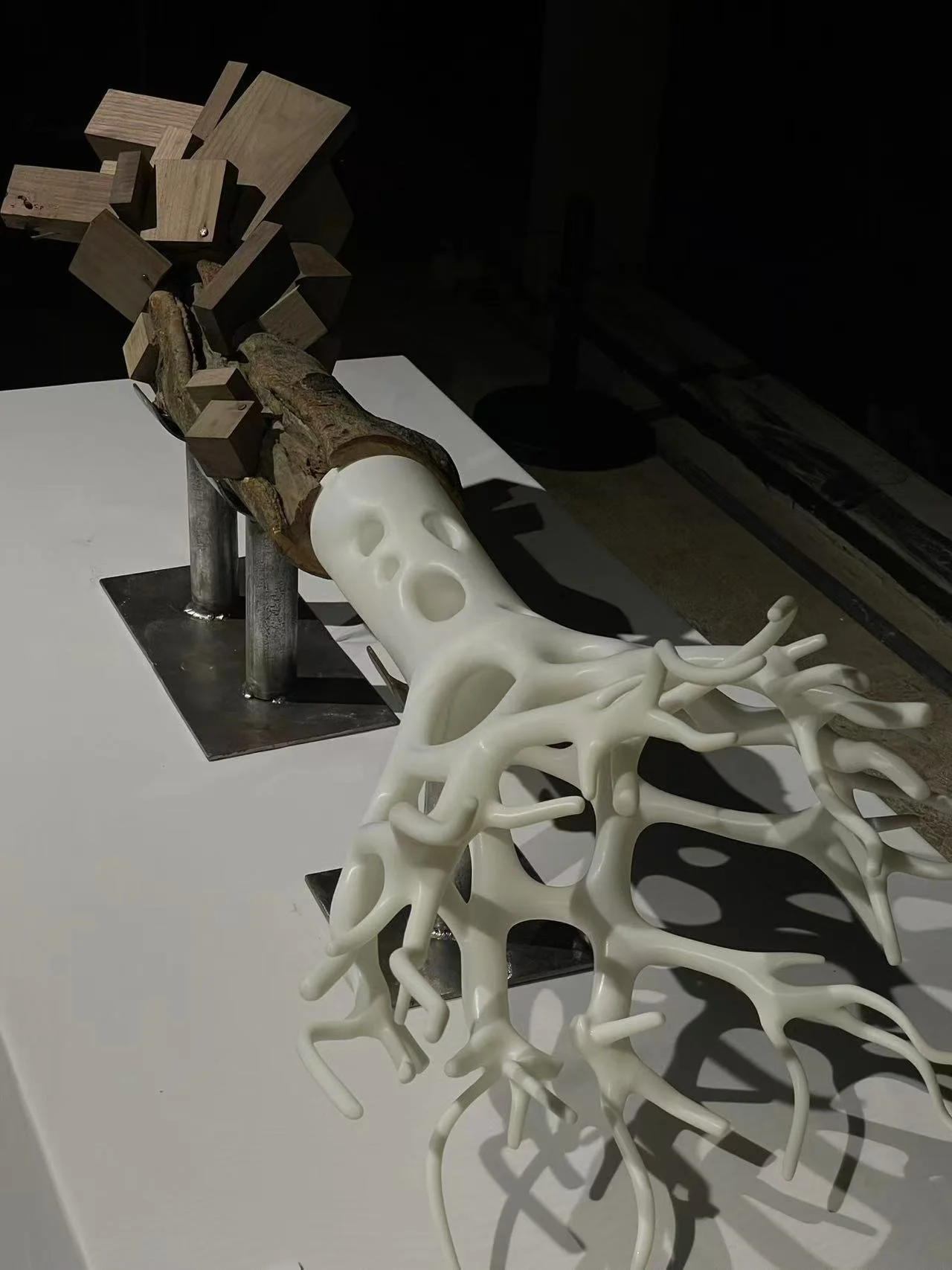
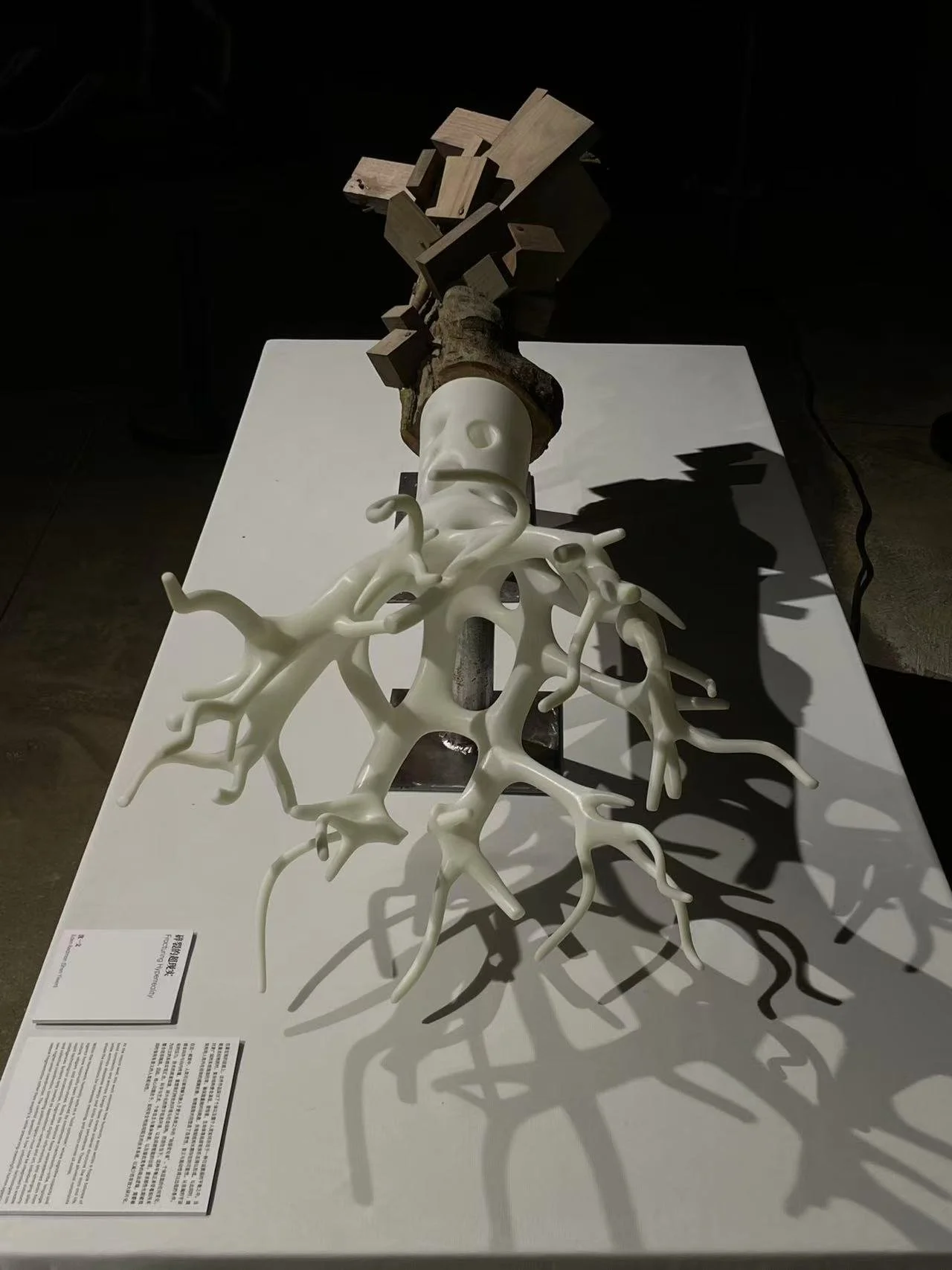
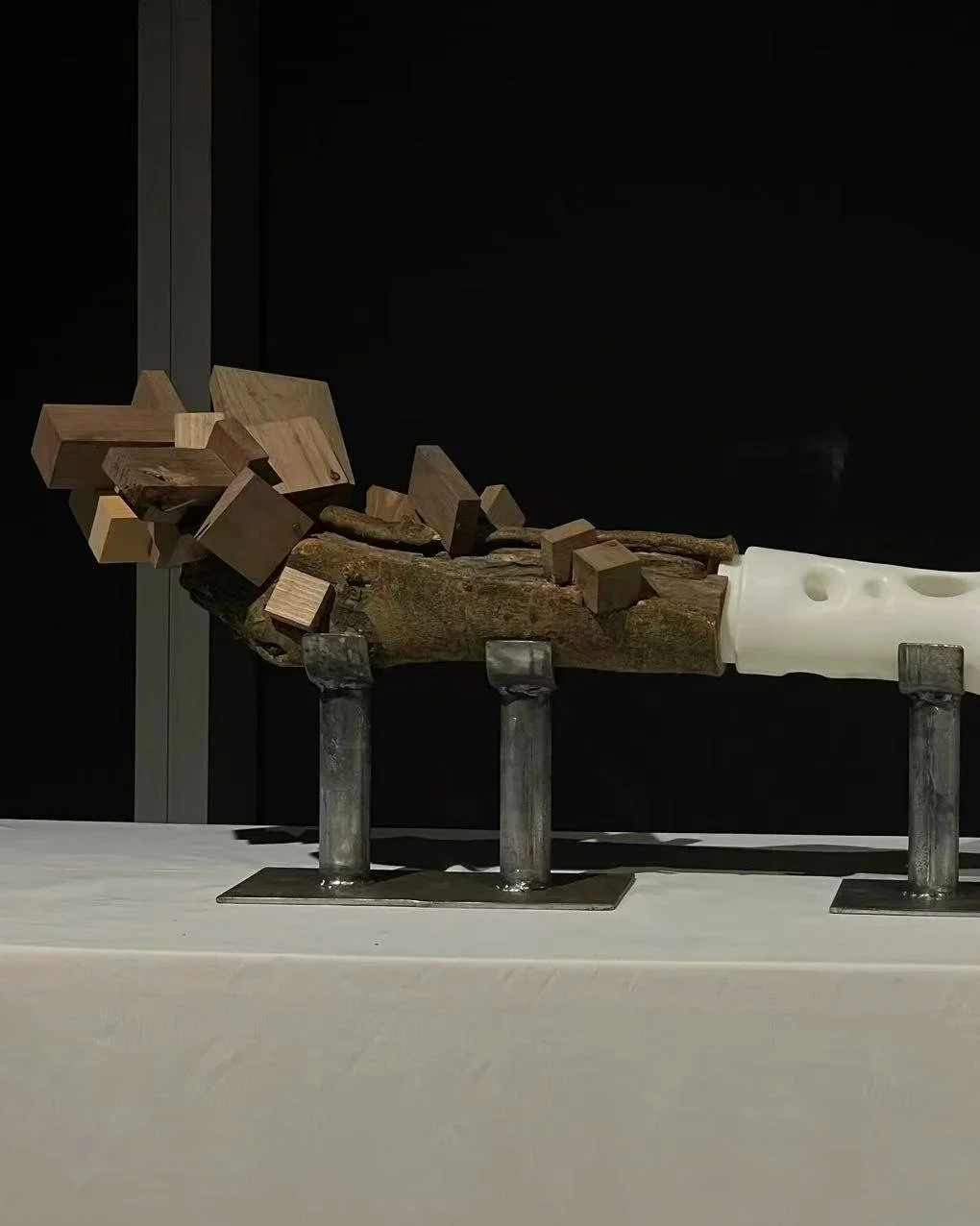

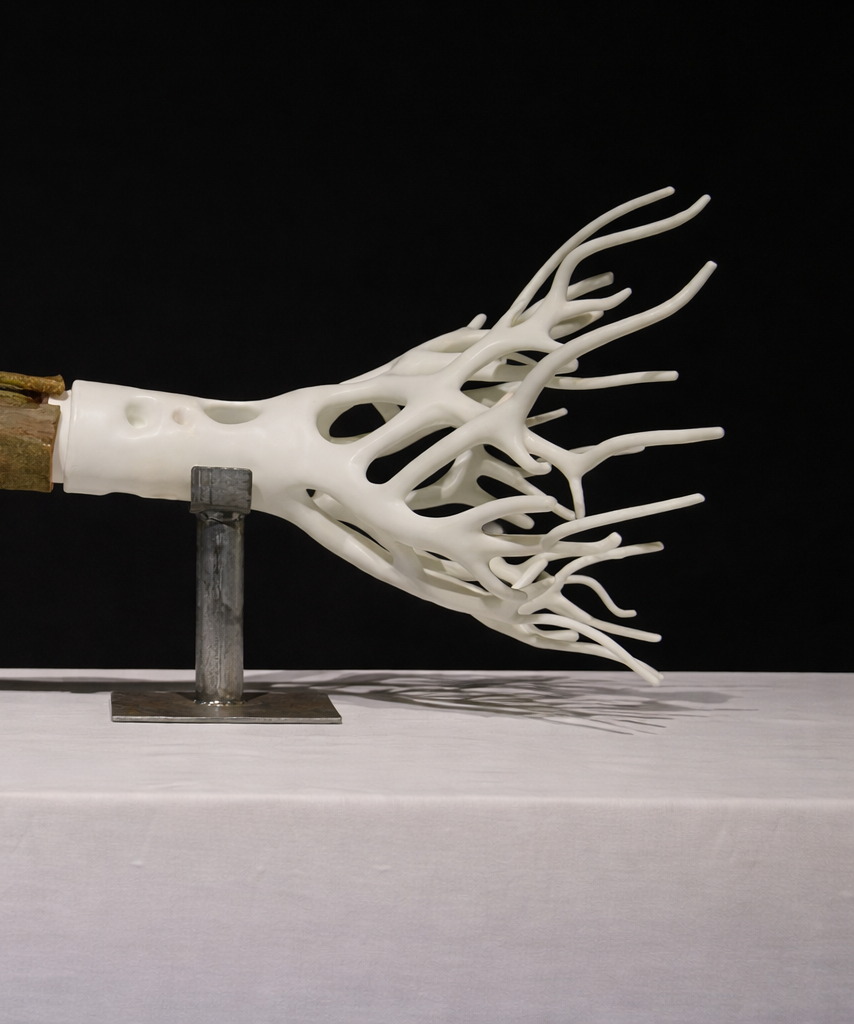
Fracturing Hyperreality fragments too. The fracture is the thing being examined, not merely the mode of examination.
Having that work end up in the UABB, an exhibition that has spent twenty years insisting that creative work must engage real conditions rather than aestheticize detachment from them, felt like the right context. The biennale has always been about the city as a living system under pressure. The piece is about that exact pressure at every scale.
What it Clarified about Canada
Here's the harder conversation, and the one I'll be building on in future posts.
Watching how Shenzhen operates — the deliberate cross-pollination, the institutional investment in productive collision between domains — brought into sharp focus what Canada's innovation ecosystem consistently fails to do and, more importantly, why it fails to do it.
The problem is not talent, and the problem is not ideas. The problem is incentive structures that reward signaling over exploration, and an institutional culture that has mistaken the performance of interdisciplinarity for the thing itself.
We have produced a system — in universities, accelerators, granting bodies, and corporate innovation programs — that has become extraordinarily good at identifying and funding the appearance of passion-driven, cross-domain work, while systematically starving the actual conditions that produce it. The result is a generation of young people who have learned to describe what they're doing in ways that satisfy committees and algorithms, but somewhere in that translation, the actual fire goes out.
The numbers are not subtle. As of 2025, approximately914,000 Canadian youthbetween 15 and 29 are NEET (not in employment, education, or training). That's roughly one in nine. Youth unemployment hit 14.7% in 2025, the worst since 2010, with teenagers aged 15-19 reaching over 20%.
And when Statistics Canada and the World Happiness Report look at Canadian youth well-being, the picture is worse still: among people under 25, Canada now ranks71st globally in the World Happiness Report.
Young Canadians were once, on average, the happiest cohort in the country. They are now the least happy, and the decline is among the steepest of any nation tracked over the past two decades, with only three other countries having a steeper drop (Malawi, Lebanon, and Afghanistan).
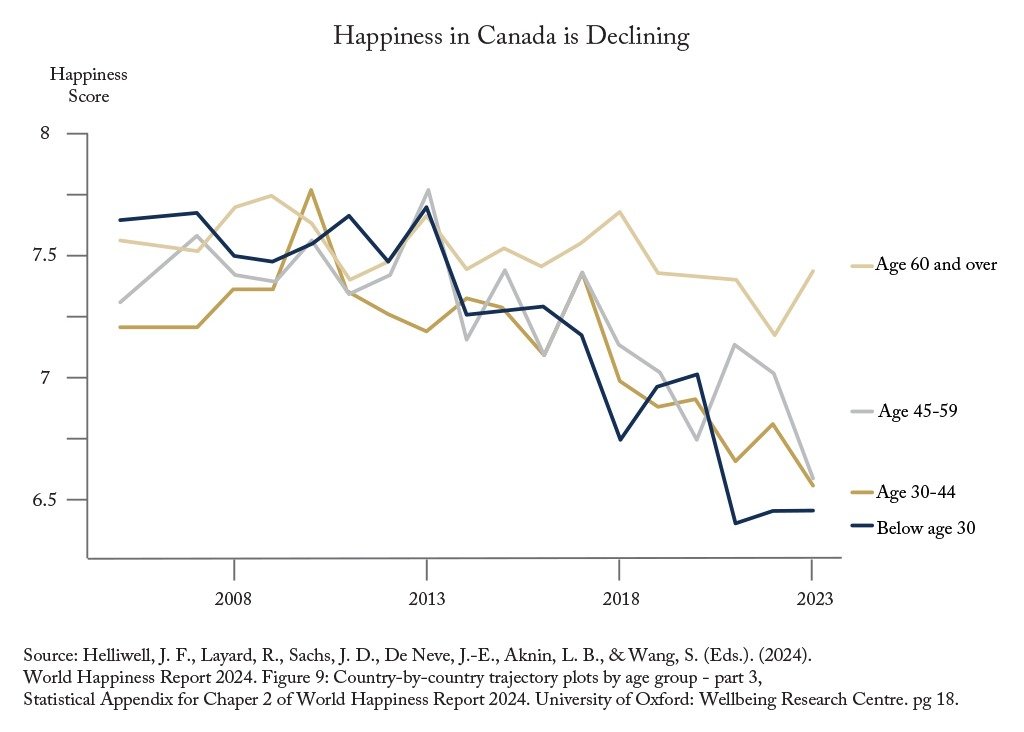
Young people have correctly read their environment, and the environment tells them that genuine exploration — going deep on something hard and weird at the intersection of two disciplines, before you can articulate its commercial application — is a risk the system will not absorb. So they either pursue the legible version of curiosity or, increasingly, come down entirely on the side of disengagement.
Both are rational responses to a broken set of incentives.
What's also worth noting: the innovation ecosystem's instinct has been quick to respond to this fragmentation by doubling down on identity-based programming and increasingly narrow interest silos. There is real value in targeted support for underrepresented groups, but that's not the argument. The argument is that small-tribe tents cannot substitute for bigger tents.
Coherence at the level of a country and at the level of an innovation ecosystem requires spaces where people who don't already agree, don't already share a background, or don't already work in the same domain are structurally pushed into productive contact with each other. We are building fewer of those spaces, not more.
What Shenzhen has that we don't have is not density — it's permission structures. It's twenty years of institutional commitment to putting the friction between technology, art, architecture, and urbanization at the center of a civic project, not at its margins.
We keep waiting for the density, but we should be building the rooms.
Eden Redman is the CEO and Executive Director of the Network for Applied Technology, a builder-focused innovation community connecting academia, industry, and entrepreneurship across Alberta and Canada. He has been pushing on the same stubborn problems in Canada's innovation ecosystem for long enough to know exactly where the walls are — and hasn't stopped pushing.
he Network for Applied Technology (NAT) is a talent-based innovation community. It is dedicated to applied technology across a growing range of high-impact domains. NAT promotes education, skill development, access to specialized tools and hardware, and community. The network connects people across academia, industry, and the entrepreneurial sector. Its goal: drive interdisciplinary, scalable innovation across Alberta and Canada.
More from the MIT residency — and what the Canadian innovation gap looks like up close — in the weeks ahead.